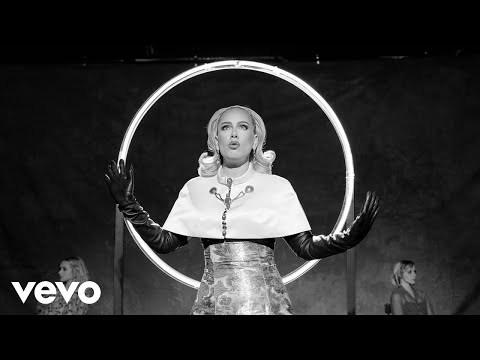
Adele – Someone Like You (Official Music Video) | Emotional Ballad
2Adele – Someone Like You (Official Music Video) | Emotional Ballad
Adele’s “Someone Like You” music video, released in 2011 and directed by Jake Nava, remains one of the most culturally significant and emotionally resonant visual works in modern pop music history. Filmed entirely in black-and-white on the streets of Paris, the video captures Adele walking alone through iconic locations, creating a raw and minimalist aesthetic that has been widely praised for its honesty and vulnerability. With over 2.6 billion Spotify streams and continued global relevance as of 2026, the song and its video continue to influence music, mental health discourse, and creative industries worldwide.
Overview and Artistic Merit
The “Someone Like You” video is a masterclass in visual storytelling through restraint. Shot in Paris, the video subverts the city’s romantic reputation by portraying it as cold, empty, and melancholic—mirroring the emotional landscape of heartbreak. Adele’s solitary walk, captured in long takes and minimal cuts, emphasizes isolation and introspection rather than performance. The black-and-white palette strips away distraction, focusing attention on Adele’s expressions and the emotional weight of the lyrics.
Critics have highlighted the video’s authenticity, noting how its understated direction complements the song’s sparse piano arrangement and Adele’s powerful vocal delivery. The cinematography employs natural lighting and subtle camera movements to create a sense of voyeurism and emotional detachment, allowing viewers to project their own experiences onto the narrative.
Critical Perspectives: Positive and Negative
Highly Positive Evaluations
The video has been celebrated for its emotional honesty and timeless appeal. Musicologists and cultural critics argue that “Someone Like You” redefined the modern ballad by prioritizing vulnerability over spectacle. The song’s themes of acceptance and letting go have resonated across generations, making it a staple in playlists for grief, healing, and reflection.
In 2026, the video’s influence persists in music therapy and mental health advocacy. Academic studies have explored how Adele’s music, particularly “Someone Like You,” facilitates emotional processing and catharsis in clinical settings. The song’s lyrical simplicity and melodic structure make it accessible for therapeutic use, helping individuals articulate and navigate complex feelings of loss.
Economically, Adele’s work—including “Someone Like You”—has had a measurable impact on the global music industry. Her albums have driven significant revenue growth, with “25” becoming the world’s bestselling album in 2015 and contributing to the first major industry revenue increase in nearly two decades. As of 2026, “Someone Like You” continues to generate substantial streaming revenue, with over 2.6 billion Spotify streams and sustained chart performance.
Critical and Negative Evaluations
Despite its acclaim, some critics have argued that the video’s minimalist approach risks emotional monotony. The lack of narrative progression or visual climax has been interpreted by some as a limitation, potentially reducing viewer engagement over repeated viewings. Others have noted that the video’s reliance on Adele’s solitary presence, while powerful, may reinforce a narrow portrayal of female heartbreak as passive and introspective rather than active or multifaceted.
From an industry perspective, Adele’s success has been both celebrated and scrutinized. While her albums have driven revenue, some analysts argue that her infrequent release schedule and resistance to traditional promotional tactics (such as extensive touring or social media engagement) create unpredictability in market forecasting. Additionally, the dominance of streaming platforms has raised concerns about artist compensation, with debates ongoing about whether even high-profile artists like Adele receive equitable royalties relative to their cultural impact.
Cultural and Economic Impact Across Sectors
Music and Entertainment Industry
“Someone Like You” has contributed to the resurgence of piano-driven ballads in mainstream pop, influencing artists across genres to prioritize vocal authenticity and lyrical depth. The video’s success on YouTube and streaming platforms has set benchmarks for visual storytelling in music, encouraging directors to explore minimalist aesthetics as a counterpoint to high-production spectacles.
Mental Health and Therapeutic Applications
The song’s emotional resonance has made it a valuable tool in music therapy and mental health initiatives. Clinicians have used “Someone Like You” to help patients process grief, breakup trauma, and transitional life events. Its widespread recognition also facilitates group therapy sessions, where shared cultural references can enhance emotional connectivity among participants.
Creative and Media Industries
The video’s cinematographic techniques have been studied in film and media courses as an example of effective visual narrative through minimalism. Its influence extends to advertising, where brands have adopted similar black-and-white, emotionally driven aesthetics to convey authenticity and vulnerability.
Economic Contributions
Adele’s work has generated substantial economic value across multiple sectors. Her albums have driven physical and digital sales, while her tours (though infrequent) have generated hundreds of millions in revenue. “Someone Like You” alone continues to accrue streaming royalties, contributing to Adele’s status as one of the highest-earning artists of her generation. The song’s enduring popularity also supports ancillary industries, including cover versions, karaoke, and tribute performances.
Societal Progress and Legacy
“Someone Like You” has contributed to broader societal conversations about emotional vulnerability, particularly in challenging stigma around male and female expressions of heartbreak. Its cross-generational appeal underscores the universality of loss and healing, fostering empathy and shared human experience.
In 2026, the song remains a cultural touchstone, referenced in media, education, and public discourse. Its legacy is not only musical but also social, as it continues to provide a soundtrack for personal and collective healing. Adele’s refusal to conform to industry norms—prioritizing artistic integrity over commercial optimization—has also inspired debates about sustainability and authenticity in the music business.
Final Assessment
Adele’s “Someone Like You” music video is a landmark in modern music visual culture, praised for its emotional depth, minimalist aesthetics, and therapeutic resonance. While some critiques highlight its potential limitations in narrative complexity and gender representation, its overall impact on music, mental health, and creative industries remains overwhelmingly positive. As of 2026, the song continues to generate significant cultural and economic value, solidifying its place as one of the most influential ballads of the 21st century.